

 Cultural Couture
 Bespoke Bridal
 Ready-To-Wear
 Legacy Brides Initiative
Nigerian Brides, wedding dress
How Many Outfits Does a Nigerian Bride Need?
Jul
Three at minimum. Five if you are having a Lagos wedding. Seven or more if you are doing the full sequence, from the introduction all the way through to the thanksgiving service on Sunday.
That is the honest answer, and it is not the part that catches brides out. The number is manageable. What catches brides out is the sequencing: which look has to be decided first, which fabric has its own production window before a single stitch is sewn, and which garment you should never commission until another one is already finished.
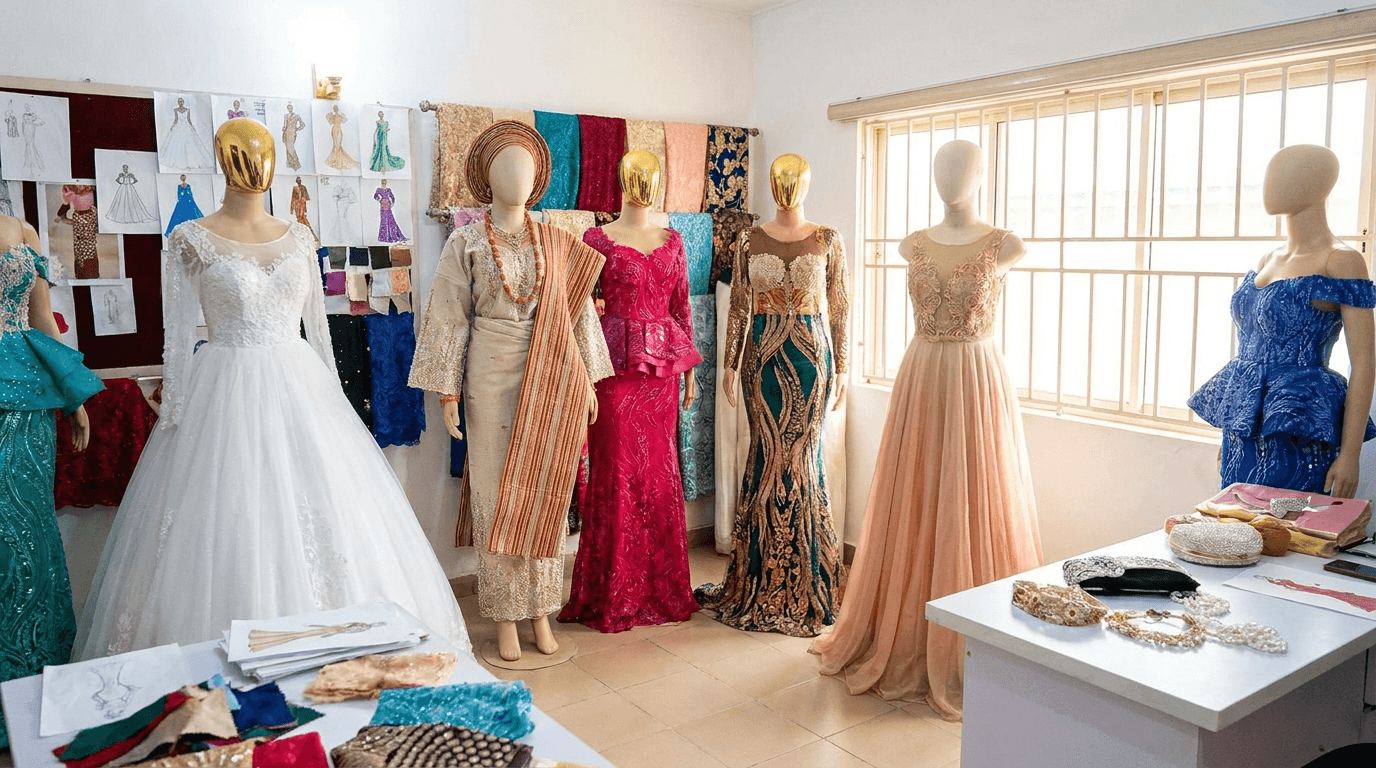
This guide is written from inside a working Lagos atelier. It covers every look a Nigerian bride realistically plans for, what a full bridal wardrobe costs in 2026 in naira and in dollars, and how early each piece actually needs to be ordered. Not the timeline that sounds cautious. The one that is true.
The short answer: three, five, or seven
Nigerian weddings are not one event. They are a sequence of events, and each one asks something different of the bride.
- Three looks is the floor: traditional ceremony, white wedding, reception. Below this you are wearing a ceremonial outfit to a party, or a party dress to a ceremony, and both read wrong.
- Five looks is standard for a Lagos wedding: the three above, plus the introduction and a pre-wedding shoot look.
- Seven or more covers the full sequence: add the registry ceremony, the after-party, the bridal shower, and the thanksgiving service.
There is no correct number. There is only the number that matches the events you are actually holding. A bride having a combined traditional and white wedding on the same day genuinely needs fewer pieces than a bride whose introduction, court ceremony and wedding are spread across four months.
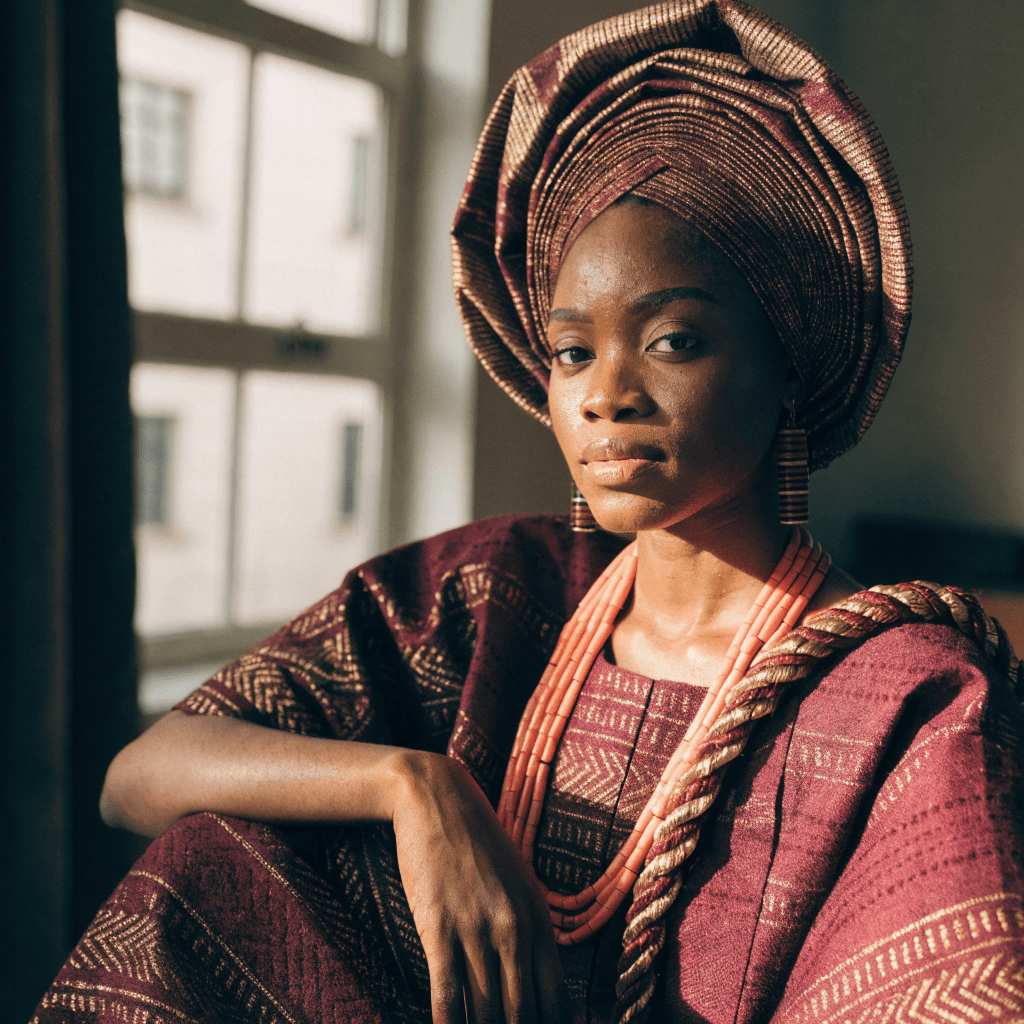
Every look a Nigerian bride plans for
Below is the full sequence in the order it usually happens, not the order people think about it. Lead times are given relative to that specific event, not to the wedding date, because the introduction can sit six months ahead of the wedding and planning backwards from the wrong date is how brides end up rushing.
| Look | Occasion | Typical fabric | Commission by |
|---|---|---|---|
| Introduction | Families formally meet | Lace, adire, lighter aso oke | 8 weeks before the introduction |
| Bridal shower | Hosted by friends, often abroad | Silk, crepe, structured lace | 6 weeks before |
| Pre-wedding shoot | Two to three looks | Varies by concept | 8 weeks before the shoot date |
| Court or registry | Legal ceremony | Crepe, mikado, clean lace | 6 weeks before |
| Traditional ceremony | Engagement, Igba Nkwu, Fatiha | Hand-woven aso oke, george, isi agu | 12 weeks before the wedding |
| White wedding | Church or venue | French lace, silk, tulle, beadwork | 12 to 16 weeks before |
| Reception | The second look | Bold colour, fitted, movement-friendly | 8 weeks before |
| After-party | Late night | Shorter, lighter, freer | 6 weeks before |
| Thanksgiving service | The Sunday after | Elegant, restrained, church-appropriate | 6 weeks before |
The introduction
This is the first time both families sit in the same room as families. The bride’s look here should be elegant and composed, not competitive. It is not the day to out-dress the traditional ceremony, and brides who do usually regret how the photographs sit next to each other later.
An iro and buba in soft lace or a well-cut adire, or a restrained gown, with a simple gele. The register is respect, not spectacle.
The bridal shower
Once a diaspora import, now standard among Lagos and abroad brides alike. Usually white, cream or a single soft colour. This is the one look in the sequence where you can be playful without anyone raising an eyebrow.
The pre-wedding shoot
Two to three looks, and the timing constraint that most brides miss entirely. Your shoot images go on your save-the-dates, your invitation suite, your wedding website and the screens at your reception. That means the shoot has to happen eight to twelve weeks before the wedding, which means those garments have to be finished before that, which pulls the whole calendar forward by roughly a month.
If your printer needs images by a certain date, work backwards from the printer, not from the wedding.
The court or registry ceremony
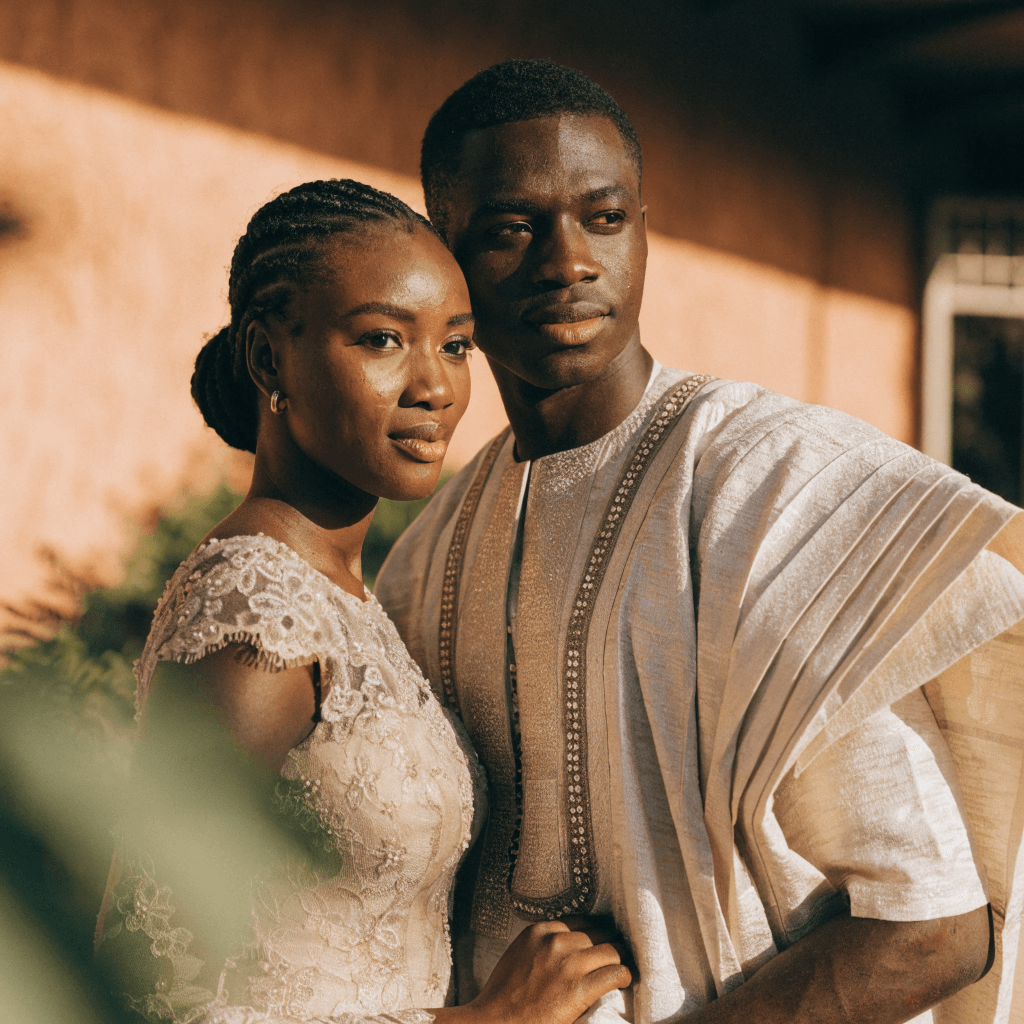
Increasingly its own occasion rather than a formality, and increasingly photographed properly. The register here is structured and restrained: clean lines, controlled volume, nothing that fights a registry office or a small ceremony room. We have written about this in detail in our guide to court wedding dresses and how to have one made for you.
The traditional ceremony
The look that carries the most cultural weight, and the one with the longest true lead time.
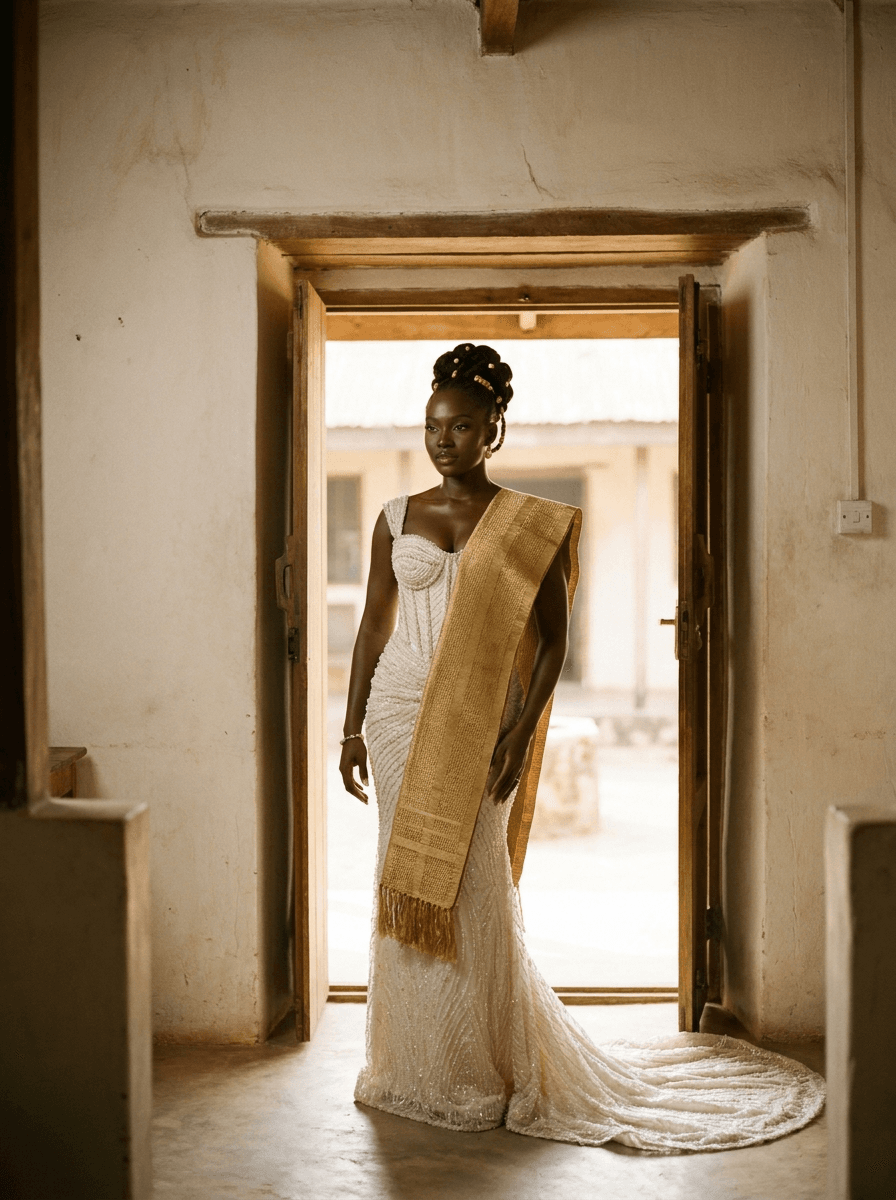
For a Yoruba bride, that is the iro and buba in aso oke, with gele, ipele and beads. Our history of aso oke bridal fashion covers where the cloth comes from and why it carries the weight it does. For an Igbo bride at the Igba Nkwu, it is often two looks within a single day: the maiden outfit, frequently with isi agu, and then the main george wrapper with a fitted blouse and coral. For a Hausa bride, the Fatiha and the surrounding days each carry their own change.
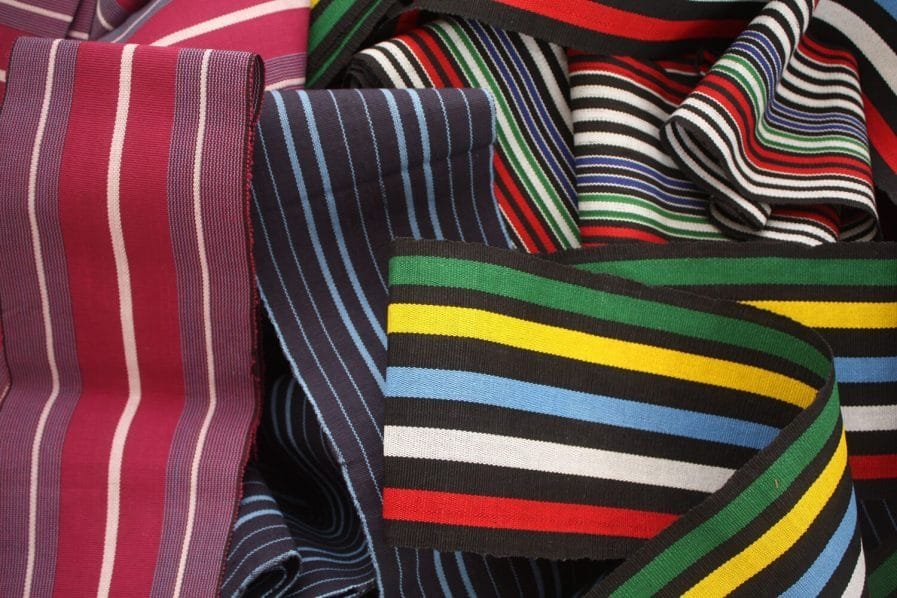
The detail nobody tells you: custom hand-woven aso oke has a production window of its own, before the garment is even cut. Weavers need time. If you want a specific colour, weave and motif rather than something already on a shelf, that fabric has to be commissioned weeks ahead of the sewing. This is the single most common reason a traditional look ends up rushed.
The white wedding gown
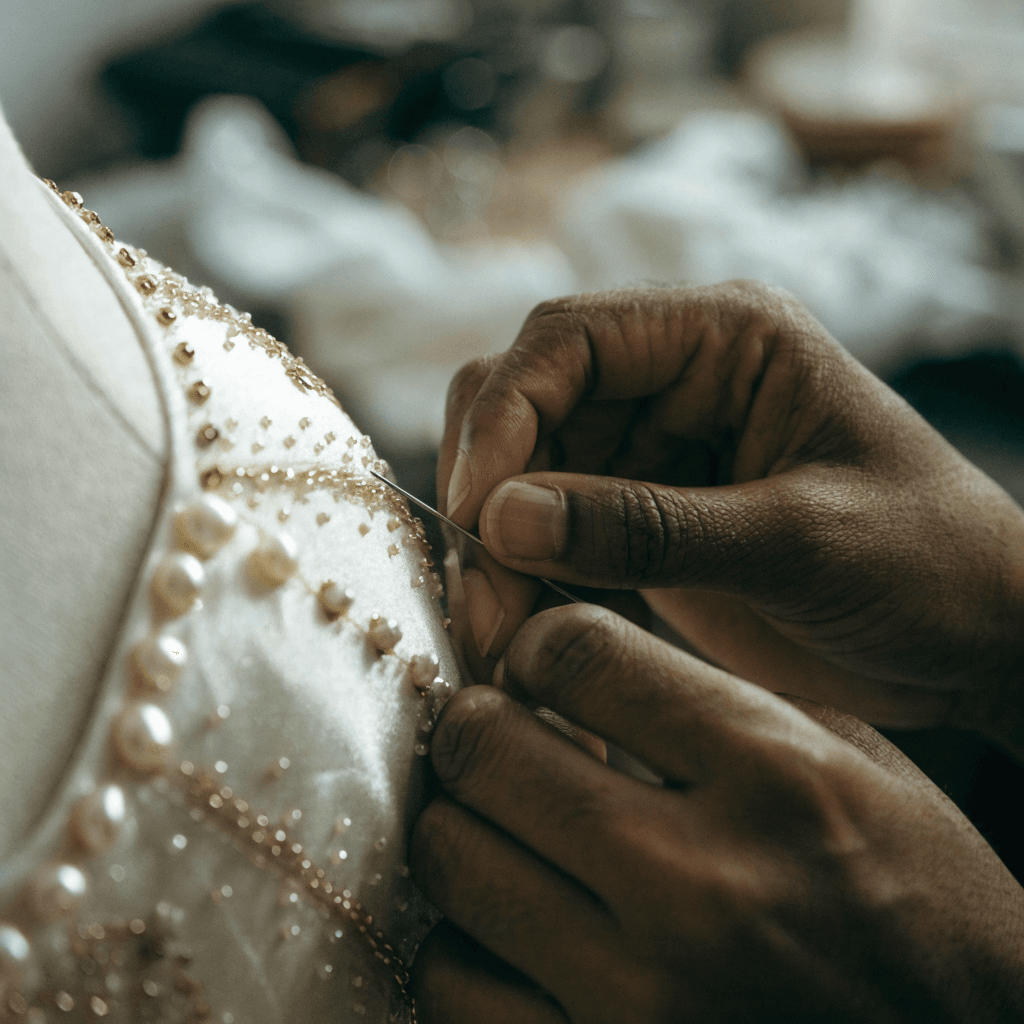
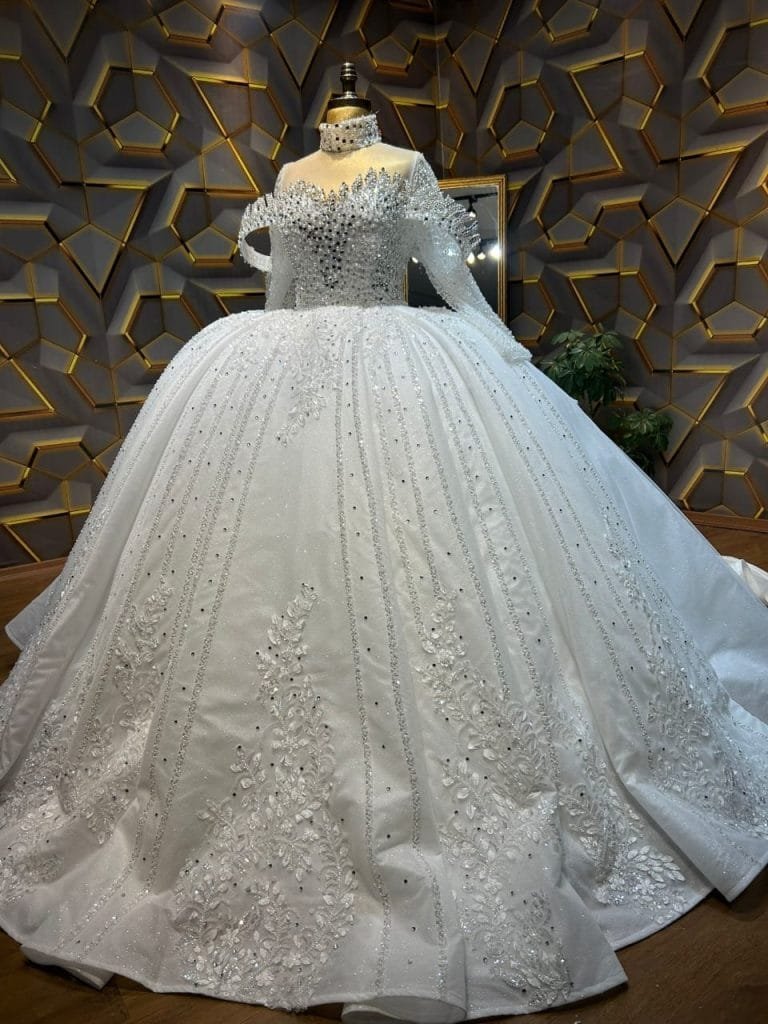
The most labour-intensive garment in the wardrobe, and the one that should be started earliest. Beadwork is measured in hours, not days. Internal structure, the corsetry and support that holds a gown through eight hours of standing, dancing and being embraced by four hundred people, is invisible work that takes as long as the visible kind. If you are still deciding on direction, our piece on how Nigerian brides choose their wedding dress is a useful starting point.
The reception look
The change. Bolder colour, closer fit, built for movement. The practical brief is simple: you have to be able to dance in it, sit through the speeches in it, and get in and out of it quickly in whatever room the venue has given you.
The after-party and the thanksgiving service
The after-party look is shorter, lighter and freer than anything else in the sequence. The thanksgiving service on Sunday is the opposite: elegant, restrained, church-appropriate. Almost no wedding guide mentions the thanksgiving outfit, and almost every Nigerian couple ends up needing one.
What a Nigerian bridal wardrobe costs in 2026
Most bridal commissions at Bojamiley fall between ₦800,000 and ₦5,000,000 per garment. Two variables move a piece from one end of that range to the other, and they matter more than everything else combined: style and fabric.
That range is for a garment designed and cut to your body. Ready-made bridal pieces in our Bespoke Bridal collection are listed individually and sit below it.
For brides ordering from abroad, converted at rates current in July 2026:
| Currency | From | To |
|---|---|---|
| Naira | ₦800,000 | ₦5,000,000 |
| US dollars | about $570 | about $3,600 |
| Pounds sterling | about £420 | about £2,650 |
| Canadian dollars | about C$800 | about C$5,000 |
Exchange rates move. These conversions are indicative, not quotations. We quote diaspora clients in US dollars or your preferred currency at the rate on the day.
Lighter pieces, a simple registry look for example, are quoted individually and often sit below that range. Accessories are priced separately: gele, ipele, beadwork and veils are not included in a garment quote.
The number diaspora brides should actually be comparing
If you live in Houston, London or Toronto, the useful comparison is not what a gown costs in Lagos versus what your cousin paid in Lagos. It is what a fully bespoke gown costs where you live.
A made-to-measure bridal commission in the US or UK, where the pattern is drafted to your body rather than adjusted from a size chart, rarely starts below four thousand dollars and climbs steeply from there. The same standard of work, from an atelier in Lagos, sits inside the range above.
What actually drives the price
- Fabric. Hand-woven aso oke commissioned to your colourway, genuine imported French lace, and mill-printed alternatives are three completely different cost bases. Fabric is included in our quotes, which is exactly why the range is as wide as it is.
- Beadwork and handwork. Priced in hours. A hand-beaded bodice and a machine-embellished one can look similar in a photograph and differ by a factor of five in labour.
- Internal structure. Boning, support, lining and the engineering that lets a heavy gown hold its shape all day. Invisible, and a large share of what you are paying for.
- Finishing. How the seams are closed, how the hem is weighted, how the closures are set. This is what separates a garment that photographs well from one that also holds up in person at hour seven.
The two clocks: production time and decision time
Almost every Nigerian wedding guide tells you to start your outfits nine to twelve months out. That advice is not wrong, but it is imprecise in a way that causes real damage, because it leaves brides believing the workshop needs nine months.
It does not. We can produce a wedding dress on one month’s notice. We say that because we can, not because it is a target. There are two separate clocks running, and conflating them is what puts brides in trouble.
Here is what actually fills those five months, and none of it happens inside a workshop: agreeing a silhouette you will still love in photographs a decade from now, sourcing or commissioning fabric, aligning your look with your bridal train and your mother’s outfit, coordinating with the aso ebi your family has chosen, and building in room for the fittings that make a garment fit rather than merely close.
Working backwards from your wedding date
- Six months out. Consultation. Direction agreed for the full wardrobe, not one garment at a time. This is the single highest-leverage step, because looks decided together photograph as a wardrobe rather than as a collection of separate outfits.
- Four to five months out. Fabric sourced or aso oke commissioned with weavers. Designs signed off for the traditional look and the white gown.
- Three months out. Production begins on the white gown and traditional look. Deposit paid, measurements locked.
- Ten to twelve weeks out. Pre-wedding shoot garments finished, shoot completed, images to your printer.
- Eight weeks out. Reception and after-party looks in production. First fittings on the major pieces.
- Three to four weeks out. Final fittings. Nothing structural changes after this point.
Can we work faster than this? Yes, including at peak season, and rush commissions attract a priority fee agreed in advance. But a bride who arrives with six weeks and a firm date is choosing from a narrower set of options than a bride who arrived with six months, and the difference shows up in fabric availability far more than in workmanship.
Ordering from Lagos when you live abroad
Most of our diaspora brides never set foot in the atelier until the week of the wedding, and their garments fit. The process is not improvised, and you should be suspicious of anyone who treats it as though it is. If you are weighing up whether to commission remotely at all, our guide to designing your dream wedding dress walks through how the process runs from first conversation to delivery.
How the fit is protected without you in the room
- Guided measurements. You are not left with a tape measure and a list of terms. Measurements are taken to instruction, ideally by another person rather than yourself, and reviewed before anything is cut.
- Virtual fittings. Scheduled video fittings at defined stages, not casual check-ins when someone remembers.
- Alteration allowance built into construction. Seams are constructed so a garment can be adjusted on arrival. Bodies change between measurement and wedding day. A garment built without that allowance cannot forgive it.
Shipping is on top of production, not inside it
The one-month production window does not include getting the garment to you. Add courier transit and allow for customs, which is unpredictable in a way that couriers are not. Then add a further two weeks at your end for any local alteration.
The practical rule for a diaspora bride: whatever date you think is your deadline, your real deadline is a month earlier. Not because production is slow, but because the distance between Lagos and your door is the one variable nobody controls.
Five decisions that cost Nigerian brides money
- Commissioning the white gown before the traditional look. The traditional outfit has the longer fabric lead time and the heavier cultural constraints. Settle it first, then build the white gown to sit alongside it. Doing this in reverse is the most expensive ordering mistake in Nigerian bridal.
- Buying fabric at market before a designer has speced it. Yardage depends on the silhouette, and the silhouette does not exist yet. Brides routinely buy five yards for a design that needs eight, then discover the dye lot cannot be matched.
- Treating each look as a separate project. Decided one at a time, over months, with different reference images, a wardrobe ends up as a set of unrelated outfits. Decided together, it reads as one bride across nine events.
- Ignoring the bridal train until late. Your bridesmaids’ outfits and your own have to be resolved as one problem. Left late, they clash, and the clash is permanent because it is in every photograph. Our Nigerian wedding guest style guide is worth sending to anyone who is unsure what to wear.
- Booking the fitting calendar too tight. Final fittings sit three to four weeks out for a reason. Brides who leave them to the final week have no room to correct anything, and correction is the entire point of a fitting.
Plan the wardrobe, not the wedding dress
Bojamiley designs full bridal wardrobes from our Lagos atelier, for brides in Nigeria and across the diaspora. One consultation, every look decided together, so your introduction, your traditional ceremony, your white wedding and your reception belong to the same story.
We can work to one month. We would rather work to six.
Book a bridal consultationFrequently asked questions
How many outfits does a Nigerian bride need?
Three at minimum: traditional ceremony, white wedding and reception. Five is standard for a Lagos wedding, adding the introduction and a pre-wedding shoot look. Seven or more covers the full sequence including the registry ceremony, after-party, bridal shower and thanksgiving service.
How much does a Nigerian bridal outfit cost in 2026?
Most bridal commissions fall between ₦800,000 and ₦5,000,000 per garment, roughly $570 to $3,600 at July 2026 rates. Style and fabric are the two variables that move a piece across that range. Fabric is included in the quote. Accessories such as gele and beadwork are priced separately.
How long does it take to make a wedding dress in Nigeria?
Production takes about one month for a single gown. The longer timeline most brides are quoted covers decisions rather than sewing: agreeing a design, sourcing or commissioning fabric, and scheduling fittings. We recommend beginning the conversation six months out, while retaining the ability to work to one month where a bride needs it.
Can a wedding dress be made in one month in Nigeria?
Yes. Bojamiley can produce a wedding dress on one month’s notice, including during peak wedding season, and rush commissions attract a priority fee agreed in advance. The constraint at one month is fabric availability rather than workmanship, so a bride working to a short timeline chooses from a narrower set of options.
Which bridal outfit should be ordered first?
The traditional ceremony look. It carries the longest fabric lead time, particularly where hand-woven aso oke is being commissioned to a specific colourway, and it has the heaviest cultural constraints. The white gown should be designed to sit alongside it, not before it.
Can I order a Nigerian wedding dress from abroad?
Yes. Most of our diaspora brides commission remotely from the US, UK and Canada. The process uses guided measurements reviewed before cutting, scheduled virtual fittings, and an alteration allowance built into construction so the garment can be adjusted on arrival. International shipping time sits on top of the production window.
How many outfits does a Yoruba bride wear?
A Yoruba bride typically wears an iro and buba in aso oke with gele and ipele for the engagement ceremony, then a white gown and a reception look if a white wedding follows. With the introduction and pre-wedding shoot included, five looks is the usual total.
How many outfits does an Igbo bride wear?
An Igbo bride often wears two looks within the Igba Nkwu alone: a maiden outfit, frequently featuring isi agu, followed by the main george wrapper with a fitted blouse and coral beads. With a white wedding and reception added, six looks is common.
Do I need a separate reception dress?
Not necessarily, but most Nigerian brides choose one. A ceremony gown is built for structure and presence, while a reception look is built for movement and a fast change. Where budget is tight, a detachable train or removable overskirt lets a single gown serve both.
When should a diaspora bride place her order?
Treat your real deadline as one month earlier than you think. Production takes about a month, international courier transit and customs add unpredictable time, and a further two weeks should be allowed for any local alteration on arrival. Beginning the consultation six months out leaves comfortable room for all three.
Prices and exchange rate conversions in this guide were last reviewed in July 2026. Bojamiley is a luxury fashion house based on Victoria Street, Ojota, Lagos, designing custom bridal, traditional and occasion wear for women in Nigeria and across the diaspora.

Pingback: Design Your Dream Wedding Dress: Cost, Timeline & Fit