

 Cultural Couture
 Bespoke Bridal
 Ready-To-Wear
 Legacy Brides Initiative
African Fashion, fashion, PROM, PROM DRESS, Prom Dresses
How Nigerian Designers Are Redefining Prom Fashion Around the World
May
The TikTok was thirty seconds long. Eighteen-year-old Brianna LeDoux from Florida spinning slowly in front of a bedroom mirror, the hem of her gown catching the light, the fabric structured in a way no department store mannequin could replicate. The caption was simple. The dress was custom. The designer was Nigerian. The view count climbed past 1.1 million, and somewhere in the comments, dozens of American teenagers were typing variations of the same question.
Where do I get this?
That single video was not an isolated moment. It was the visible peak of a quietly seismic shift in global prom culture, one that has flipped a long-standing trade direction on its head. For decades, formalwear travelled outward from American and European fashion houses into the rest of the world. Today, in a reversal that fashion analysts are still catching up to, Nigerian and African designers are exporting prom couture to the very countries that once defined it. And the daughters and granddaughters of the Nigerian diaspora, scattered across Atlanta, London, Toronto, Houston, and Maryland, are leading the cultural pull.
This is the story of how Lagos, Ibadan, and Port Harcourt quietly took over an American high school tradition. And why prom 2026 is going to look very different from prom 2016.
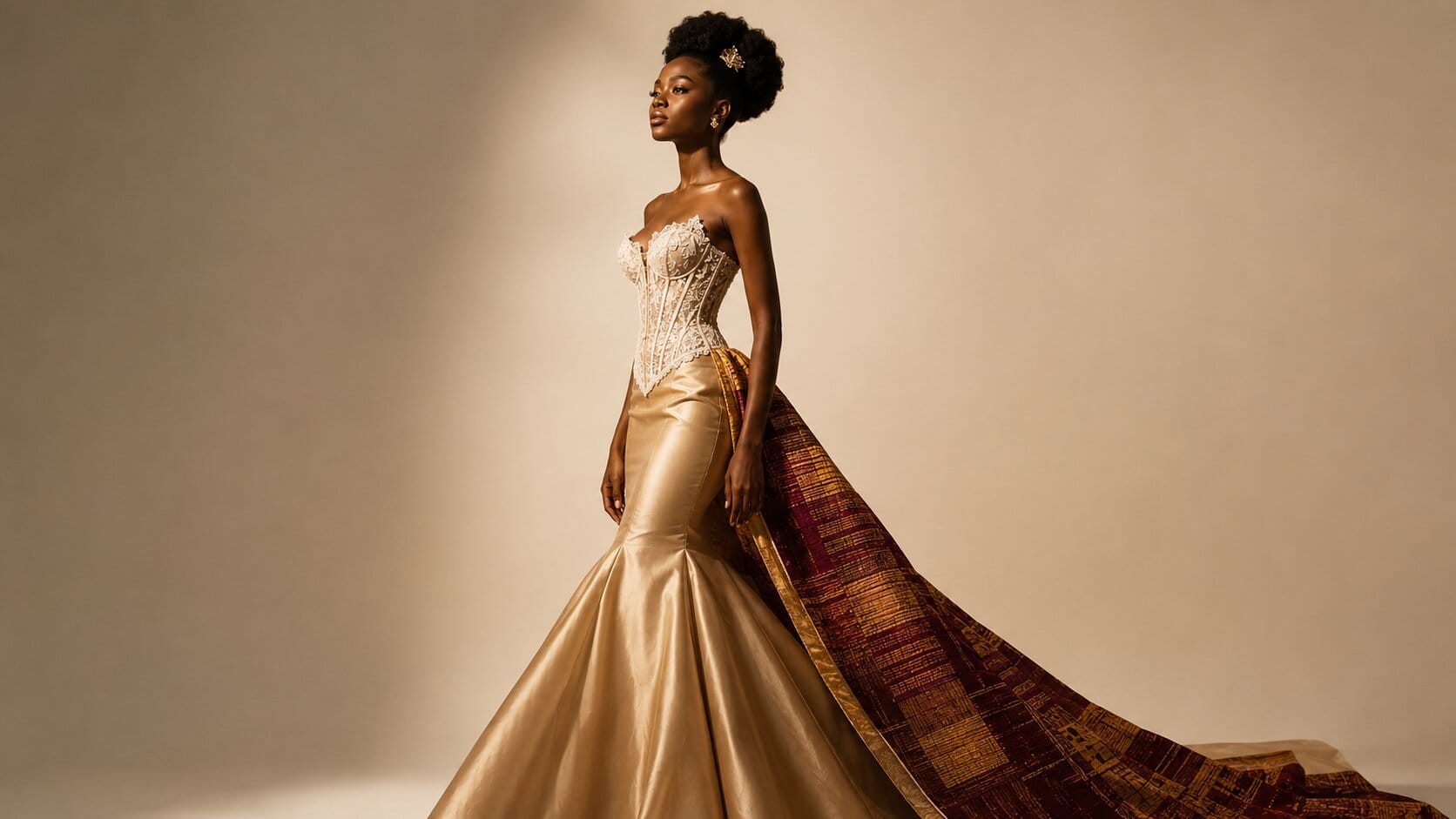
The Numbers That Tell the Real Story
The phenomenon is not anecdotal. It is measurable, and the data lines up with what a Nigerian aunty in Houston could have told you three years ago.
According to a BBC investigation that interviewed five fashion designers in Nigeria and Ghana, those five businesses alone fulfilled more than 2,800 prom orders in the 2025 season, the overwhelming majority bound for the United States. One designer, Shakirat Arigbabu, operating out of Ibadan, was responsible for 1,500 of them. A single atelier. One thousand five hundred prom gowns. Shipped, customs handled, into American zip codes that did not exist on her radar five years ago.
The pricing math is the part that quietly changed the game. The BBC reports that an average Nigerian-made custom prom dress costs between $600 and $1,000, with luxury commissions exceeding $1,500. Compare that to the cost of having a comparable gown custom-made in the United States, which the same report puts at $3,500 and up. For diaspora families and increasingly for non-diaspora American teenagers, the value proposition is no longer subtle. You get more couture, more cultural depth, and more personalization, for less than a third of the local custom price.
What the 2025 Prom Season Looked Like
Five designers across Nigeria and Ghana, more than 2,800 orders shipped abroad. One Lagos atelier: 1,500 dresses in a single season. Average price: $600 to $1,000. US-made comparable: $3,500 minimum. Prom commissions now account for up to 25 percent of annual revenue for some Nigerian designers.
For some Nigerian designers, prom commissions have become so reliable that they now represent up to 25 percent of total annual revenue. That is not a side hustle. That is a category.
Why Lagos. Why Now.
Nigeria has the largest fashion industry in West Africa. According to Statista projections cited by Marketing Edge, the Nigerian fashion market reached approximately $1.39 billion in revenue in 2025 and is projected to grow at a compound annual rate of 7.22 percent, hitting roughly $1.85 billion by 2029. Beyond the headline number, Nigeria accounts for an estimated 15 percent of Africa’s $31 billion fashion and textile sector. Lagos sits at the centre of that ecosystem.
The why-now answer is more interesting than the why-Lagos answer.
For one, the city has spent fifteen years building visible global infrastructure for its fashion industry. Lagos Fashion Week, founded in 2011 by Omoyemi Akerele, now showcases more than 60 designers each season to a global audience of over 40,000 buyers, media, and consumers. The 2025 anniversary edition, themed “In Full Bloom”, drew international press and front-row attendance from the kind of fashion editors who used to ignore Africa entirely. Nigerian designers like Kenneth Ize won the LVMH Karl Lagerfeld Prize, with Naomi Campbell wearing his Aso Oke designs at Paris Fashion Week. Lisa Folawiyo’s Jewel by Lisa is featured in Vogue and Elle. Deola Sagoe became the first Black woman to showcase at New York Fashion Week.
That visibility creates a halo. When a teenager in Brooklyn searches “Nigerian prom dress” on TikTok, the search results are no longer some fringe market. They are couture-grade work coming out of an industry the world’s biggest fashion houses are now openly courting.
And then there is the diaspora itself. The Nigerians in Diaspora Commission estimates approximately 17 million Nigerians live abroad, with the largest populations in the United Kingdom, the United States, and Canada. The full Nigerian-American community, including second and third-generation Nigerian-Americans, is estimated at 700,000 to 850,000 people. The British-Nigerian total is even larger when descendants are counted. That is a lot of teenage girls. A lot of high school proms. A lot of mothers who would prefer their daughter walked into a Houston ballroom wearing something that nodded, even quietly, to where her grandmother is buried.
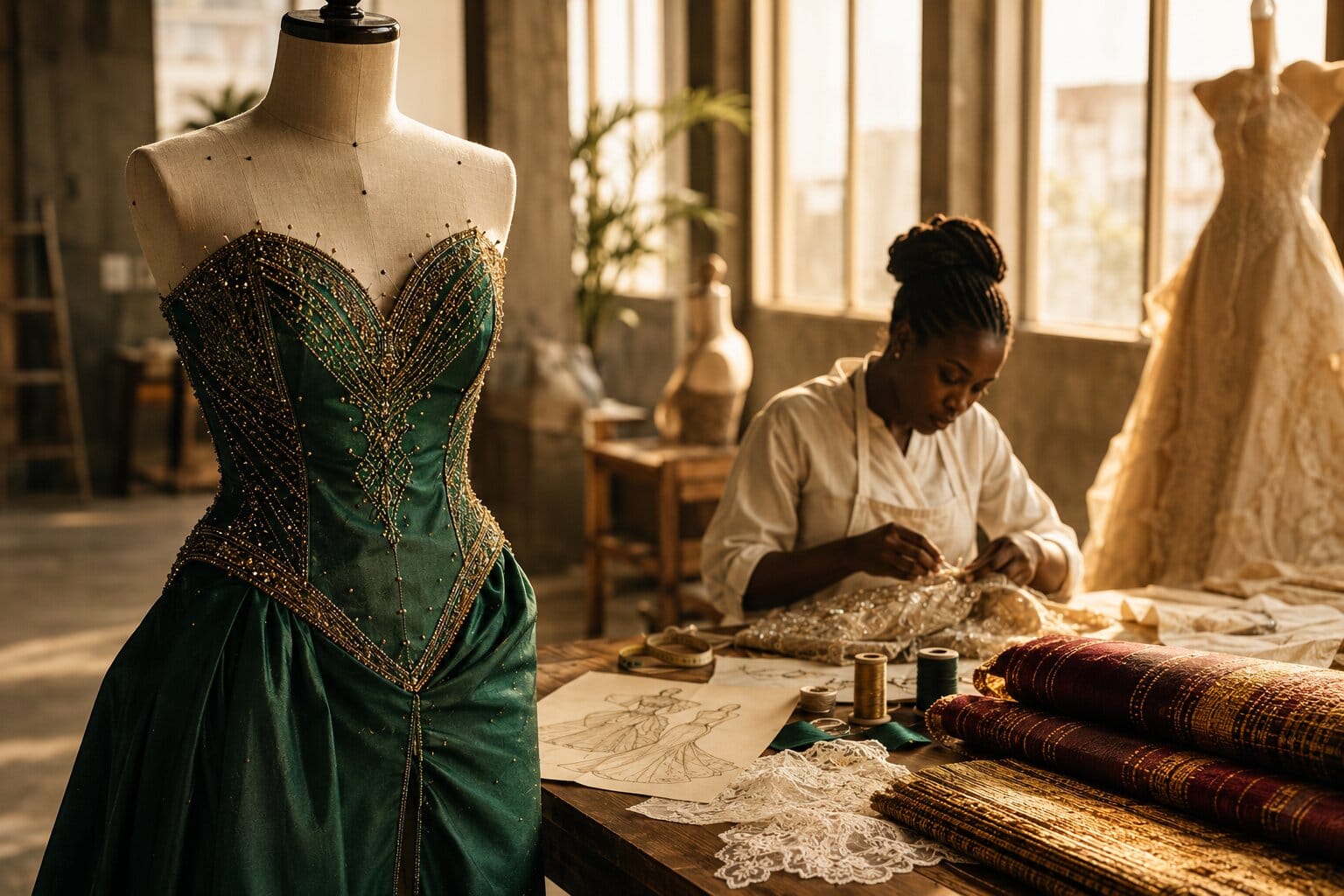
The Fabric of Heritage
Walk into any Nigerian wedding and you will see three textile families that have shaped Yoruba, Igbo, and Hausa formalwear for centuries. Each one is now finding its way, in carefully reimagined form, onto American and British prom dance floors.
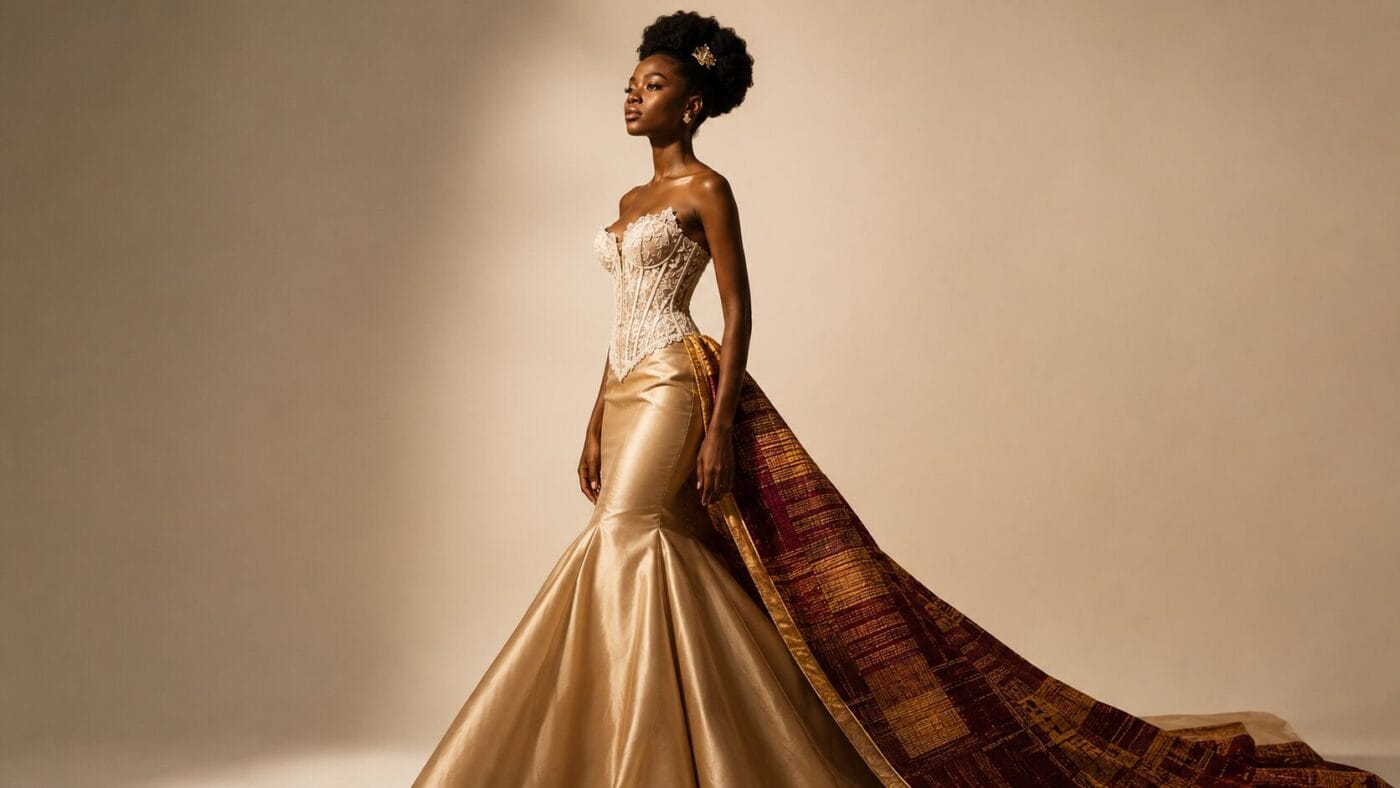
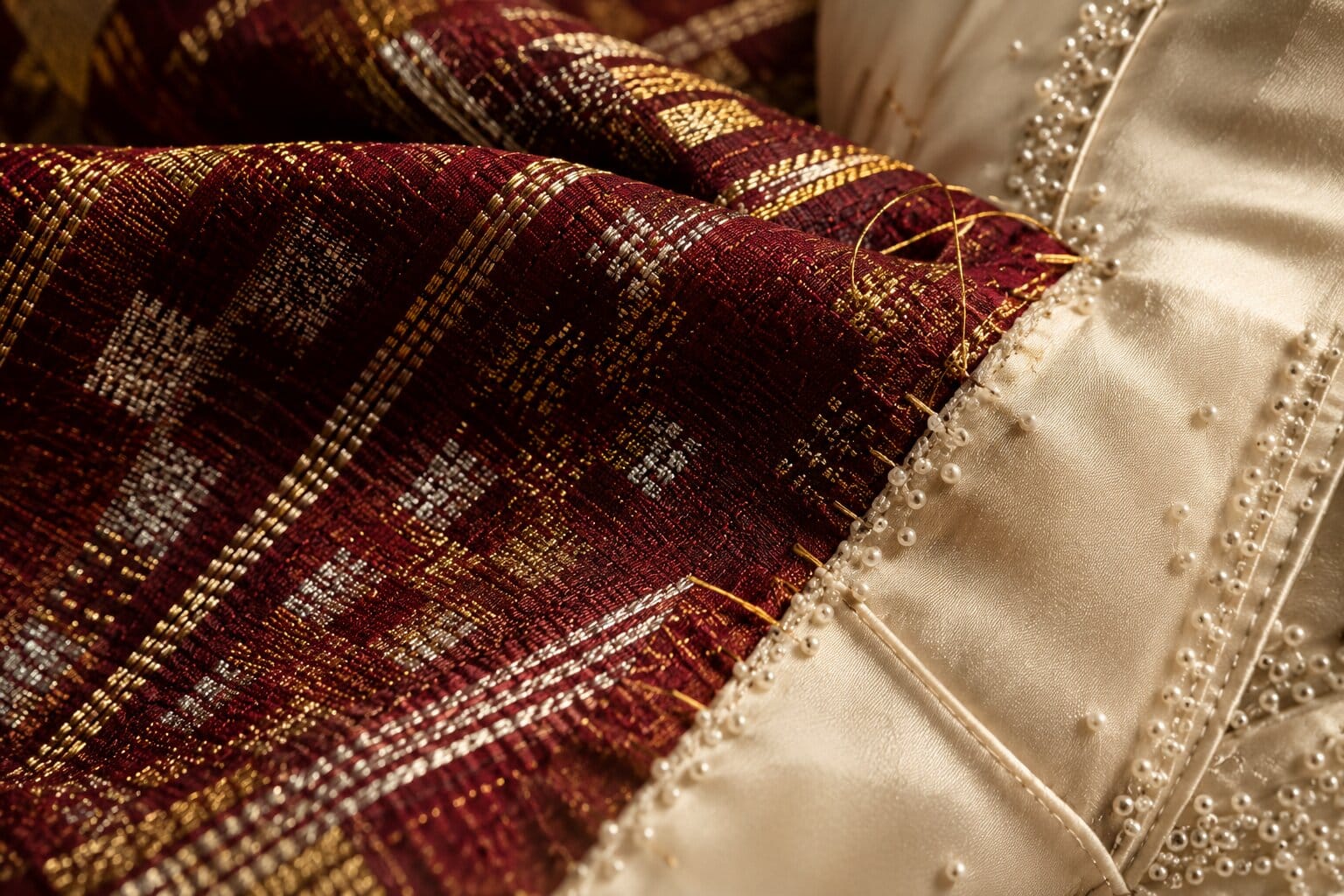
Aso Oke is the Yoruba handwoven cloth traditionally worn at weddings, naming ceremonies, and royal events. Heavy, structured, and historically reserved for moments of cultural prestige, Aso Oke has been reframed in recent years by designers who treat it the way couturiers treat duchess satin. Kenneth Ize’s runway breakthrough at Paris Fashion Week centred entirely on this textile. For a diaspora teenager, an Aso Oke panel woven into the bodice or train of a contemporary gown is the kind of detail that makes an outfit unrepeatable.
Adire is the Yoruba indigo-dyed and resist-patterned cloth, hand-produced primarily in southwestern Nigeria. With its blue-on-blue tonality, Adire reads quieter than Aso Oke but lands with the same cultural weight. Modern designers use Adire to create monochromatic gowns with subtle textile complexity, the kind of dress that photographs as solid colour from across a room and reveals its craftsmanship only when the wearer is up close.
Ankara, the West African wax print, is the loudest and most recognisable of the three. Originally a Dutch-manufactured textile that found its true home in West Africa, Ankara has become the visual shorthand for African modernity. On a prom dress, Ankara can be the entire silhouette, a single accent panel, or a hidden lining that flashes only when the wearer twirls. It is the most flexible of the three, and the easiest for a designer to translate into a contemporary cut.
French and Swiss lace, while not indigenous, has become so deeply integrated into Nigerian formal dressmaking that no honest discussion of Nigerian prom couture leaves it out. Heavy, structured lace from Calais and Lyon, applied with hand-beadwork and crystal detailing in Lagos ateliers, is one of the things American teenagers are now Googling by name.
The diaspora prom-goer who chooses a Nigerian designer rarely chooses one of these textiles in isolation. The signature move, the one Brianna LeDoux’s TikTok comment section was reacting to, is fusion. A modern mermaid silhouette in Italian silk with an Aso Oke train. A corseted bodice in French Chantilly lace with Ankara accent lining. A duchess satin column gown with hand-beaded Yoruba motifs along the shoulder seam.
That fusion is the entire creative thesis. And it is something no off-the-rack American prom store can replicate, because their entire model is built on standardisation, and this category exists in opposition to standardisation.
The Designers Leading the Movement
The Nigerian fashion designers shaping global prom fashion are not all working in the same lane. The category has stratified into at least three distinct tiers, and a diaspora client choosing where to commission her gown is essentially choosing which lane she wants to be in.
At the haute couture and global luxury tier sit names that have been profiled by Vogue, Elle, and Harper’s Bazaar for years. Deola Sagoe, Lisa Folawiyo, Kenneth Ize, Tiffany Amber’s Folake Folarin-Coker, Mai Atafo, Lanre Da Silva Ajayi, and Andrea Iyamah have built brands that operate at the intersection of African heritage and international ready-to-wear. Their pieces have walked New York, Paris, and Milan runways. They are not primarily prom designers, but their aesthetic vocabulary is what every prom-focused atelier is learning from.
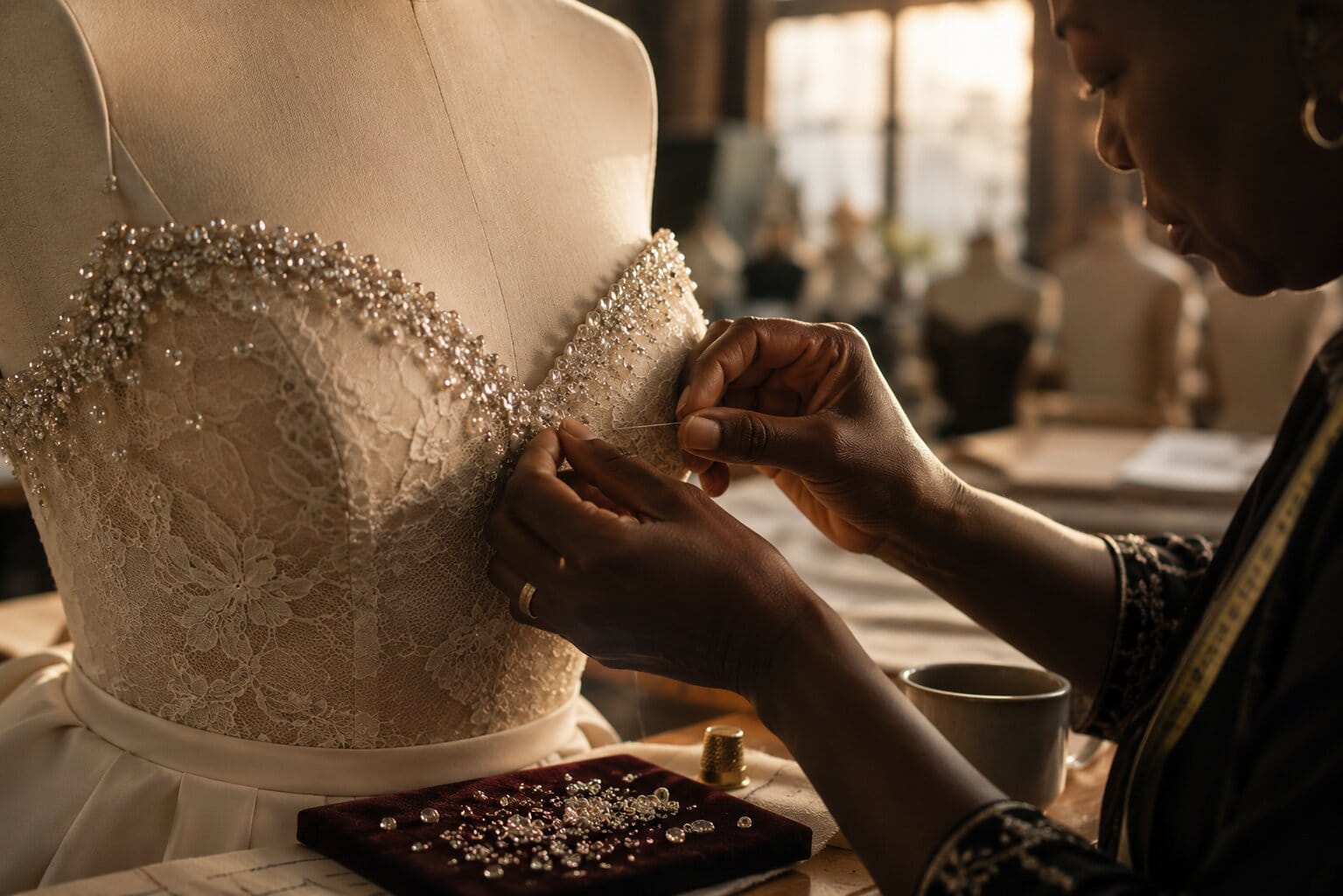
At the luxury bespoke and bridal-anchored tier are Lagos couture houses whose primary business is wedding gowns and high-occasion wear, and who have now extended their craft into the prom category as the diaspora demand has scaled. These are ateliers built around custom commissions, virtual consultations, and white-glove international shipping. They tend to dress diaspora clients who want gowns of bridal complexity and cultural depth, with the budget and timeline to support it. Bojamiley, headquartered on Victoria Street in Ojota, Lagos, sits in this tier. Founded by designer Adebayo Oluwatimileyin, the house spent more than a decade building a bridal practice with hundreds of diaspora clients, and now extends that same craftsmanship into custom prom commissions for Nigerian and African girls in cities like London, Atlanta, Houston, Toronto, and Maryland. Other ateliers operate similarly, each with their own creative signature, but the Lagos couture-bridal-prom pipeline is now a defined production category.
At the direct-to-consumer prom specialist tier are designers who built their entire businesses around the TikTok-Instagram pipeline. Studios like Vitae Couture, Zurik, and others have made their names through viral fitting videos, ship-to-USA reels, and hashtags like #nigeriapromdesigner. Their pricing tends to start lower than the luxury bespoke tier, their volumes are higher, and their visual language is unapologetically optimised for the camera. This is the tier that fulfilled the bulk of those 2,800 dresses the BBC counted.
The diaspora teenager researching her options on TikTok is, often without realising it, sorting between these three tiers in real time. The right choice depends on her budget, her timeline, the depth of cultural detail she wants, and how she imagines the photos.
The TikTok-Instagram-WhatsApp Pipeline
The most underestimated part of this story is not the design talent. It is the distribution model. Nigerian prom designers have, almost by accident, built one of the most efficient global fashion sales funnels currently operating anywhere.
It works in three stages, and every stage runs on a free consumer app.
TikTok builds the fame. A short-form video of a finished gown spinning on a model, or a fitting clip of a diaspora client trying her dress on for the first time, can land on the For You page of millions of teenagers worldwide. Hashtags like #nigerianpromdress, #prom2025, and #promdressfromnigeria have collectively driven hundreds of millions of views. A single video of a Nigerian father flying his daughter’s dress home from Lagos in time for prom drew 6.6 million likes alone. The algorithm is the marketing budget.
Instagram converts the interest. Once a TikTok lands, the curious viewer scrolls to the linked Instagram profile, where the brand’s aesthetic is presented in its full curated form. Image grids of finished gowns, behind-the-scenes atelier shots, client unboxings, before-and-after fittings. The Ibadan-based designer Shakirat Arigbabu summarised it perfectly to the BBC. Instagram brings the sales. TikTok brings the fame.
WhatsApp closes the deal. The actual commercial conversation, fabric samples, video consultations, measurement walk-throughs, payment plans, shipping coordination, happens on WhatsApp. It is not unusual for a Nigerian designer to manage hundreds of active client threads simultaneously, with each conversation including voice notes, sketches, and progress photos.
The Funnel That Moved Mountains
TikTok for fame. Instagram for sales. WhatsApp for service. Three free apps, one global pipeline, thousands of prom dresses crossing the Atlantic each season. No retail footprint. No traditional advertising. No middlemen.
The model is so effective because it bypasses every traditional gatekeeper of global fashion retail. There is no department store buyer to convince. No trade show booth to rent. No wholesale margin to absorb. The teenager in Memphis sees the dress on Tuesday, DMs the designer on Wednesday, has a video consultation by Friday, and the gown is on a courier to her city eight to twelve weeks later. That is faster than the order-to-delivery cycle for most American couture houses, and it is built on consumer software a teenager already has on her phone.
What Diaspora Prom-Goers Are Actually Buying
Strip away the data and the trend pieces, and the clearest way to understand this movement is to ask what these teenagers are actually buying. The answer is not just a dress. It is a constellation of things American mall stores cannot sell.
Identity. The defining emotional driver of this category is cultural pride. A Yoruba-American teenager wearing an Aso Oke-accented gown to her Atlanta prom is not making a fashion choice in isolation. She is communicating, in a single visual gesture, that she belongs to two worlds and is not interested in pretending otherwise. Marie Claire Nigeria framed this as an “act of reclamation”, a way for diaspora youth to embody strength and beauty in a new cultural language.
Originality. The number one fear of any teenager walking into prom is the dress duplication catastrophe. Two girls, same gown, same hashtag. With Nigerian custom commissions, that risk is structurally eliminated. When you commission a one-of-one gown from a Lagos atelier, no one else on earth is wearing your dress. That guarantee is something off-the-rack prom retailers cannot match no matter how exclusive their inventory.
Drama. Nollywood red carpets, Lagos society weddings, and the visual language of Nigerian formalwear in general are unapologetically maximalist. Trains, beadwork, structured silhouettes, dramatic colour. American mall prom stores have, by contrast, spent the last decade selling minimalism. The shift is not just cultural, it is a return to the kind of theatricality American prom-goers used to want and could not find at home.
Craftsmanship. A teenager who watches her gown being hand-finished in real time, through video updates from a Lagos atelier, has a completely different relationship with the garment than one who picked her dress off a hanger at a mall. The transparency of the process is part of the value.
Memphis high schooler Trinity Foster, profiled by the BBC, summarised the result in one line. After her Lagos-made gown arrived and she put it on, she said it made her feel “like Tiana”, referring to Disney’s first African-American princess. That is the emotional product. That is what the $900 actually buys.
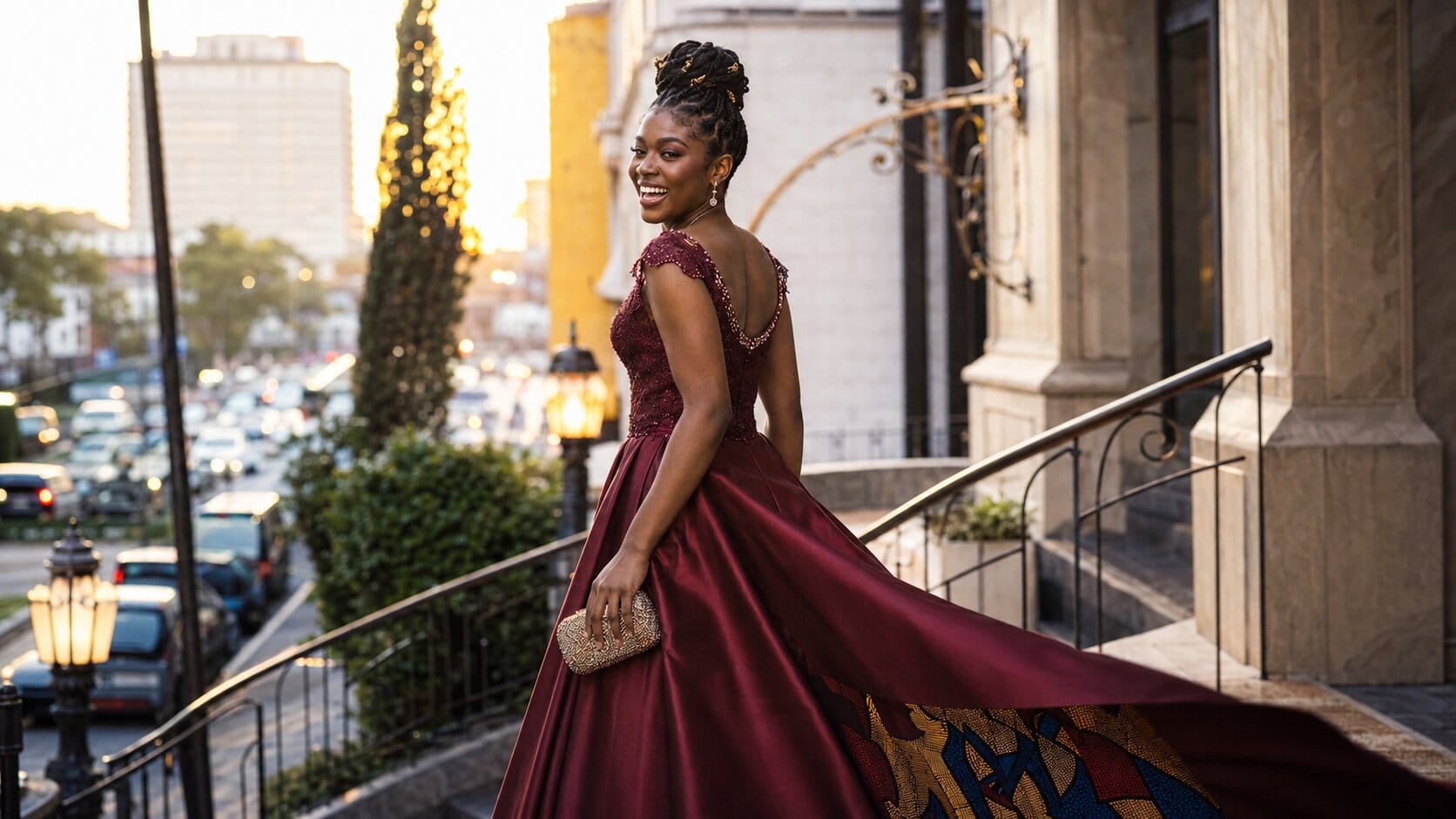
The Logistics Reality (and the Risks)
None of this is friction-free. Nigerian designers shipping prom gowns into the United States, the United Kingdom, and Canada navigate a logistical obstacle course that most diaspora clients only fully appreciate the first time something goes slightly wrong.
Customs delays are real. Designers like Accra-based Efua Mensah, who shipped 404 dresses to the United States during the 2025 season, told the BBC that some dresses arrive late because of customs issues or courier backlog. New US tariff policies introduced in 2025 have created additional uncertainty for Nigerian apparel exporters. Some designers have been locked out of US-based platforms like Etsy, narrowing the available distribution channels.
Communication friction is the second pain point. WhatsApp is brilliant for ongoing conversation but unreliable for managing complaints at scale. The same BBC report quoted Arigbabu describing one frustrated client who said, with refreshing honesty, “I don’t want it resolved, I want to go viral.” That is the dark side of TikTok-driven distribution. The same algorithm that builds your brand can dismantle it in 48 hours.
Capacity is the third issue. Lagos and Ibadan ateliers are not infinitely scalable. Some designers report working twenty-hour days during peak prom season, fixing one gown while packaging another. The most established luxury houses cap their seasonal intake well in advance, and serious diaspora clients now book consultations as early as November or December for proms taking place the following May or June.
The good news, from a diaspora client’s perspective, is that all three of these problems get smaller the higher up the production tier you go. Established luxury bespoke ateliers tend to have stronger logistics partnerships, more rigorous internal quality control, and longer planning runways. The lower-priced direct-to-consumer designers offer accessible price points and faster fame cycles but absorb more of the operational risk on the client’s behalf. Choosing the right tier for your prom is, in part, choosing how much risk you can absorb if a courier gets stuck in Atlanta customs for three days.
Group Commissions, Cultural Societies, and the Squad
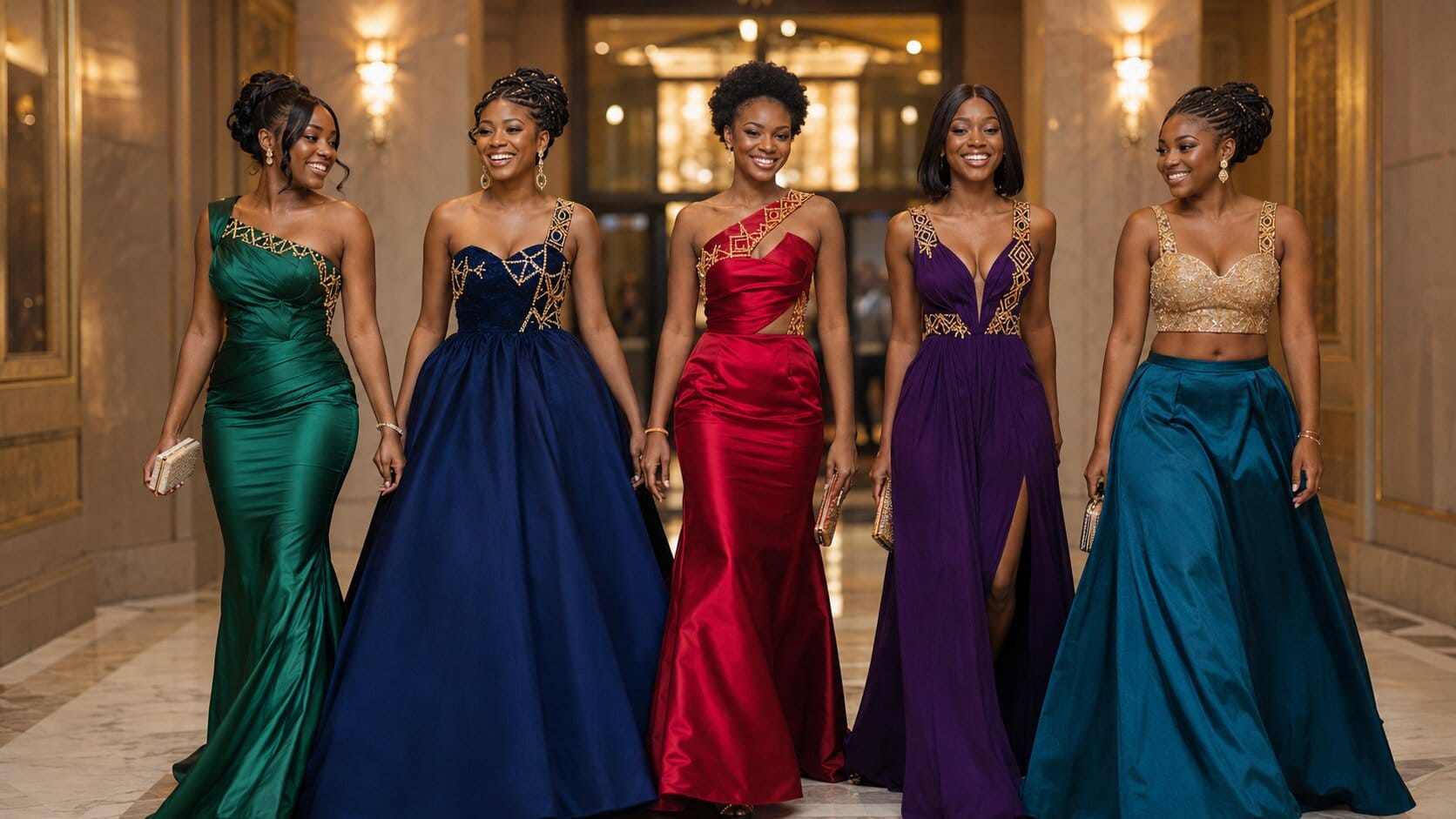
The single most underreported development in diaspora prom culture is the rise of coordinated group commissions. A Yoruba cultural society at a Maryland high school. The Nigerian Student Association at a private school in Houston. A graduating class of African girls in Toronto who decide they want to walk into prom together, in coordinated couture, as a single visual moment.
This is something no American prom retailer is structurally equipped to deliver, because the entire mall model is anti-coordination. Every dress is one of many copies. A coordinated group commission, by contrast, requires an atelier capable of designing five, ten, or twenty distinct gowns that share a colour palette, a fabric language, or a recurring detail, while remaining individually flattering on bodies of different shapes.
Lagos couture houses are uniquely equipped for this because they were built on bridal party logic. A typical Nigerian wedding involves a bridal entourage of six to ten women in coordinated outfits, often the same fabric translated into different silhouettes. The systems for designing, fitting, and producing coordinated occasion-wear at scale already exist. Diaspora prom groups are, in effect, redirecting that same infrastructure to a new use case.
The result, when it works, is one of the most photographed moments of the entire prom night. Five girls walking into the venue together, each in a custom gown, each in a fabric that shares a thread with the others, each unmistakably hers. American TikTok feeds have begun to feature these group entrances, and they consistently outperform individual dress reveals in engagement.
The Price Conversation, Honestly
It is worth being direct about what these gowns cost, because the conversation has been muddied by a thousand different price claims floating around social media.
A direct-to-consumer Nigerian prom gown, the kind a TikTok-discovered designer might produce, generally lands in the $400 to $900 range, depending on fabric and detailing. A luxury bespoke commission from an established Lagos couture house, including French Chantilly lace, Italian silk, hand-beading, and cultural fabric integration, typically runs higher, with international shipping and customs handling adding to the total. Custom luxury pieces can exceed $1,500. Group commissions usually offer per-piece discounts that improve the value as the group size grows.
The honest comparison is not against a $200 mall dress. The honest comparison is against a $3,500 American custom commission of equivalent craftsmanship, where the Nigerian alternative consistently delivers comparable couture work for a fraction of the price. The savings, for diaspora families especially, are the reason this category went from niche to mainstream in roughly four prom cycles.
The hidden line item that almost no one talks about is the resale value. A custom gown with cultural detailing tends to hold its emotional and visual relevance for years longer than a generic prom dress. It gets pulled out for cousins’ weddings, graduations, photo shoots. It gets passed down. The cost-per-wear math, when honestly calculated, almost always favours the Nigerian commission.
What This Means for Prom 2026
The 2026 prom season is shaping up to be the year the Nigerian-made prom dress moves from emerging trend to established category. Several signals point in the same direction.
First, the broader prom trend cycle is moving toward exactly the kind of work Nigerian designers have always produced. Industry trend reports for 2026 emphasise structured corset bodices, dramatic silhouettes, hand-beaded embellishment, saturated colour, and what one report calls “red carpet glamour” replacing the minimalist quiet luxury of recent seasons. That is the exact aesthetic territory Lagos couture houses have been operating in for decades.
Second, the diaspora pipeline is maturing. Designers are introducing payment plans, ready-to-ship inventory programs, and dedicated diaspora client services. The end-to-end experience is becoming more reliable each season.
Third, the cultural conversation is shifting in a direction that favours this category. Marie Claire Nigeria recently raised the question of how to make sure the global fascination with Nigerian fashion benefits the originators rather than appropriating from them. The cleanest answer to that question is to commission the actual designers. To name them. To credit the source. Increasingly, diaspora prom-goers are doing exactly that.
The teenager in Houston in May 2026 has more genuine choice than any prom class before her. She can walk into a mall and pick up something serviceable. She can spend three thousand dollars on a custom American gown. Or she can DM a Lagos atelier and have something built from scratch, in fabric her grandmother would recognise, on a timeline that gets her dress to her door with two weeks to spare.
The thing that has changed, the thing this entire phenomenon points to, is that for the first time in decades, the third option is no longer the exotic one. It is becoming the default.
Considering a custom prom gown from Lagos?
For Nigerian and African girls in the diaspora considering a fully bespoke commission, Bojamiley designs custom prom gowns and ships them globally to London, Atlanta, Houston, Toronto, Maryland, and beyond.
Read the full Bojamiley prom guideThe Quiet Significance of It All
For a long time, the story of African fashion in global media was a story of inspiration without attribution. Aesthetics travelled outward. Credit did not always travel with them.
What is happening with diaspora prom couture is structurally different. The American teenager in Memphis or Florida is not picking up a Western brand that took inspiration from Lagos. She is commissioning the actual Lagos designer. The cheque is going to Ibadan, not to a Manhattan licensing office. The dress carries the designer’s name, the designer’s process, the designer’s heritage. The story travels intact.
That is what the 1.1 million views on Brianna LeDoux’s TikTok actually represented. Not just a dress reveal. A small visible moment in a much larger reversal of how cultural value flows in global fashion. Lagos and Ibadan and Port Harcourt are not waiting for permission from New York or Paris anymore. They are running their own pipeline, on their own terms, into the most photographed nights of American teenage life.
Whatever else changes about prom in the next decade, this part of the story is unlikely to reverse. The infrastructure is built. The talent is in place. The diaspora is engaged. The aesthetic is winning.
And every May, somewhere in Atlanta or Houston or London, another teenager is going to step out of a black SUV in a gown that was sketched, cut, beaded, and hand-finished six thousand miles from her front door. She is going to walk into her prom. Phones are going to come out. Her mother is going to cry. And tomorrow morning, her cousin in Lagos is going to wake up to a screenshot of the photo on her family’s WhatsApp group, captioned with three words.
From back home.
Frequently Asked Questions
From Lagos to the World
Prom 2026 will be defined by the gowns that did not come from a mall. If you are a Nigerian or African girl in the diaspora considering a fully bespoke commission, designed in Lagos and shipped to your door, the booking window for the upcoming season is open now.
Explore Bojamiley
Pingback: Nigerian Prom Dresses: The Best Designers, Where to Buy, and How to Order in 2026 - Bojamiley