

 Cultural Couture
 Bespoke Bridal
 Ready-To-Wear
 Legacy Brides Initiative
African Fashion, fashion, sustainable fashion
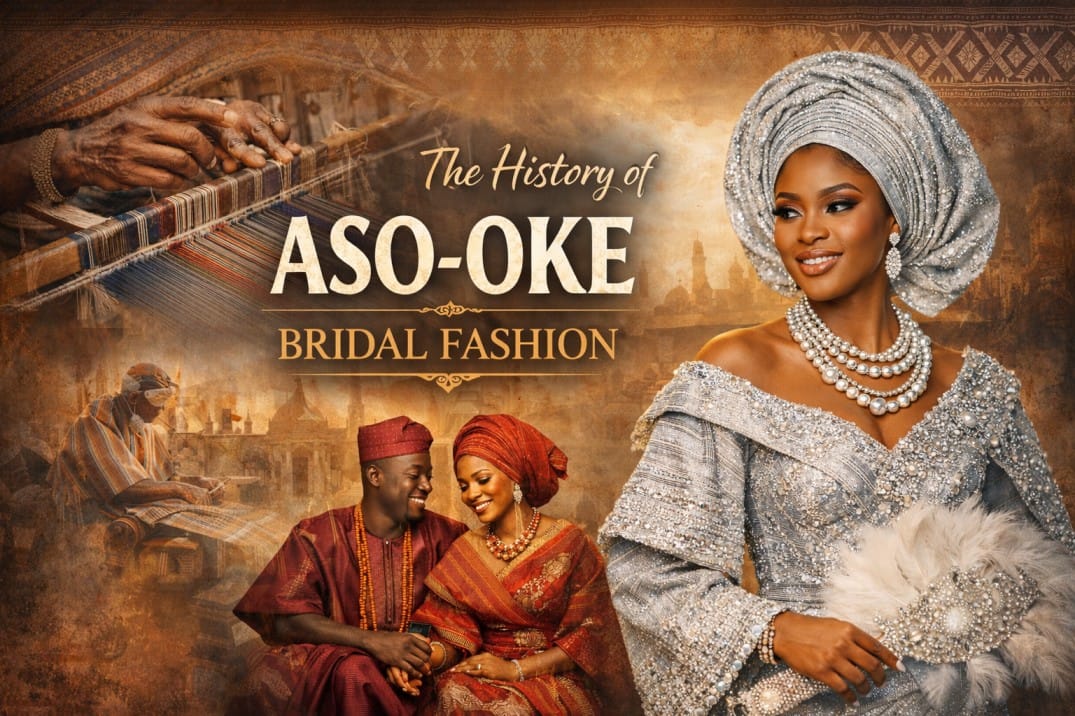
The History of Aso-Oke Bridal Fashion
Mar
A cultural, historical, and stylistic evolution of one of the most iconic Yoruba bridal traditions
Introduction
In Yoruba culture of southwestern Nigeria, Aso-Oke represents far more than cloth. It embodies
heritage, prestige, identity, and celebration. Among its many cultural roles, one of the most
visually significant is its use in bridal attire, where it symbolizes lineage, prosperity,
and cultural continuity.
Over centuries, Aso-Oke bridal fashion has evolved from a strictly traditional ceremonial garment
woven by local artisans into a globally recognized fashion statement worn by Yoruba brides both in Nigeria
and across the African diaspora.
Today, Aso-Oke bridal outfits blend traditional weaving techniques with contemporary couture design,
making them a powerful symbol of African luxury and cultural pride.
This article explores the history, cultural significance, evolution, and modern transformation of
Aso-Oke bridal fashion, tracing its journey from ancient Yoruba weaving traditions to modern
high-fashion bridal couture.
Origins of Aso-Oke
Meaning and Etymology
The word Aso-Oke comes from two Yoruba words:
- Aso – cloth
- Oke – upcountry, hinterland, or upland regions
Together, Aso-Oke literally means “cloth from the upland regions.”
Historically, the cloth was produced in several Yoruba inland towns such as:
- Iseyin
- Oyo
- Ilesa
- Saki
- Ogbomosho
These locations became renowned weaving centers long before colonial contact.
Aso-Oke is traditionally hand-woven using narrow strip looms. The strips are later sewn together
to create wider cloth pieces used for garments.
Historical research suggests that Yoruba weaving traditions date back several centuries,
with some textile historians tracing organized weaving systems to the 15th century.
Traditional Yoruba Weaving Culture
The Narrow Strip Loom
The Yoruba weaving system relies on a traditional loom that produces cloth strips approximately
2 to 4 inches wide. These strips are later stitched together to form wider textiles.
Historically, weaving activities followed a gender-based division of labor:
- Men operated the looms and performed weaving
- Women spun cotton fibers and handled dyeing processes
This cooperative textile system helped establish a thriving indigenous textile economy in Yoruba society.
Patterns created through weaving became markers of:
- Social status
- Wealth
- Community identity
- Special ceremonial occasions
Certain cloth patterns were historically reserved for royalty, chiefs, or wealthy families.
Types of Traditional Aso-Oke
Historically, three major categories of Aso-Oke fabric existed within Yoruba textile traditions.
Alaari
Alaari is traditionally dyed in deep red or burgundy tones. This cloth type was historically
associated with wealth and prestige.
Red was widely considered a symbol of power and authority within Yoruba culture.
Sanyan
Sanyan is regarded as the most prestigious Aso-Oke textile.
- Light beige or brown tone
- Produced from wild silk known as Anaphe silk
- Highly expensive
Historically worn by kings, chiefs, and high-ranking individuals.
Etu
Etu fabric traditionally features dark blue coloration with thin white stripes.
Although slightly less prestigious than Sanyan, it remained a respected textile
for celebrations and cultural gatherings.
Aso-Oke in Traditional Yoruba Weddings
In Yoruba marriage ceremonies, clothing plays a critical role in communicating
family dignity and cultural pride.
The bride traditionally wears:
- Iro (wrapper)
- Buba (blouse)
- Gele (head tie)
- Ipele (shoulder sash)
These garments are typically crafted from Aso-Oke.
The groom’s traditional attire often includes:
- Agbada
- Sokoto trousers
- Fila cap
Often made with matching Aso-Oke fabric to symbolize the union of two families.
The Rise of Bridal Aso-Oke
Historically, Aso-Oke bridal attire was relatively simple, relying on the
prestige of the fabric rather than elaborate decoration.
However, during the late twentieth century, bridal fashion began to evolve
due to several influences:
- Urbanization
- Western bridal fashion influence
- Growth of Nigerian fashion design
- Global cultural exchange
Designers began incorporating elements such as:
- Embroidery
- Beading
- Lace combinations
- Custom tailoring
These innovations gave rise to modern Aso-Oke bridal couture.
Aso-Oke and the Concept of Aso-Ebi
An important cultural tradition influencing Yoruba wedding fashion is
Aso-Ebi, which translates to “family cloth.”
Family members and close friends wear coordinated fabrics to demonstrate
unity and solidarity during important ceremonies.
During weddings:
- The bride wears special Aso-Oke
- Guests wear coordinated Aso-Ebi fabrics
This tradition reinforces the importance of Aso-Oke as a symbolic centerpiece
in Yoruba marriage celebrations.
Colonial Era Transformations
During the period of British colonial rule in Nigeria (1861–1960), Western
clothing styles began influencing Yoruba fashion.
New fashion influences included:
- Victorian dresses
- European suits
- Imported textiles
Elite Yoruba families often blended European tailoring with traditional Aso-Oke fabrics,
creating a hybrid fashion aesthetic that later influenced modern Nigerian bridal fashion.
Nigerian Fashion Industry and Aso-Oke Revival
From the 1980s onward, Nigerian designers began transforming Aso-Oke into a
luxury fashion material.
Designers modernized Aso-Oke by introducing:
- Structured silhouettes
- Bridal corsets
- Hand embroidery
- Crystal embellishments
These innovations helped elevate Aso-Oke from traditional attire to
high fashion couture fabric.
Modern Aso-Oke Bridal Fashion
Modern Aso-Oke bridal outfits combine tradition with contemporary design.
Popular Styles
- Aso-Oke mermaid gowns
- Corset Iro & Buba
- Western-style bridal gowns made with Aso-Oke
- Aso-Oke mixed with lace or tulle
Aso-Oke in the Global Fashion Scene
Aso-Oke has gained global visibility through international fashion shows
and African designers promoting indigenous textiles worldwide.
The fabric has appeared in fashion events including:
- Lagos Fashion Week
- New York Fashion Week
Yoruba diaspora communities across the United States, United Kingdom,
and Canada frequently incorporate Aso-Oke into wedding celebrations.
Cultural Significance of Aso-Oke Bridal Fashion
Cultural Identity
Wearing Aso-Oke reflects pride in Yoruba heritage.
Family Prestige
The quality of Aso-Oke historically reflected a family’s wealth and social status.
Spiritual Meaning
Wedding garments symbolize blessing, honor, and continuity between families.
Artistic Heritage
Each woven cloth represents generations of traditional craftsmanship.
Challenges Facing Aso-Oke Tradition
- Declining number of traditional weavers
- Competition from machine-made textiles
- High cost of authentic handmade fabrics
Efforts are currently underway to preserve weaving traditions in towns such as
Iseyin and Oyo.
The Future of Aso-Oke Bridal Fashion
Emerging designers are experimenting with innovations including:
- Metallic thread weaving
- Digital pattern design
- Sustainable textile production
These innovations ensure that Aso-Oke continues evolving while preserving
its cultural significance.
Conclusion
Aso-Oke bridal fashion is more than ceremonial clothing. It represents a
living expression of Yoruba culture, craftsmanship, and heritage.
From traditional weaving villages to global fashion runways, Aso-Oke
continues to connect past traditions with the future of African fashion.
References
- Gillow, John. African Textiles: Colour and Creativity Across a Continent.
- Rovine, Victoria. African Fashion, Global Style.
- Lamb, Venice. West African Weaving.
- Allman, Jean. Fashioning Africa: Power and the Politics of Dress.
- Smithsonian National Museum of African Art
- Ojo, G.J.A. Yoruba Culture: A Geographical Analysis.
